 Technology
28 April 20257 min read
Electricity prices across Europe have doubled in a decade. For industrial and commercial operators, energy is no longer a line item — it is a strategic risk. Solar photovoltaics, when engineered and installed with the same discipline as any other capital project, deliver measurable, contractually guaranteed returns over 25–30 years.
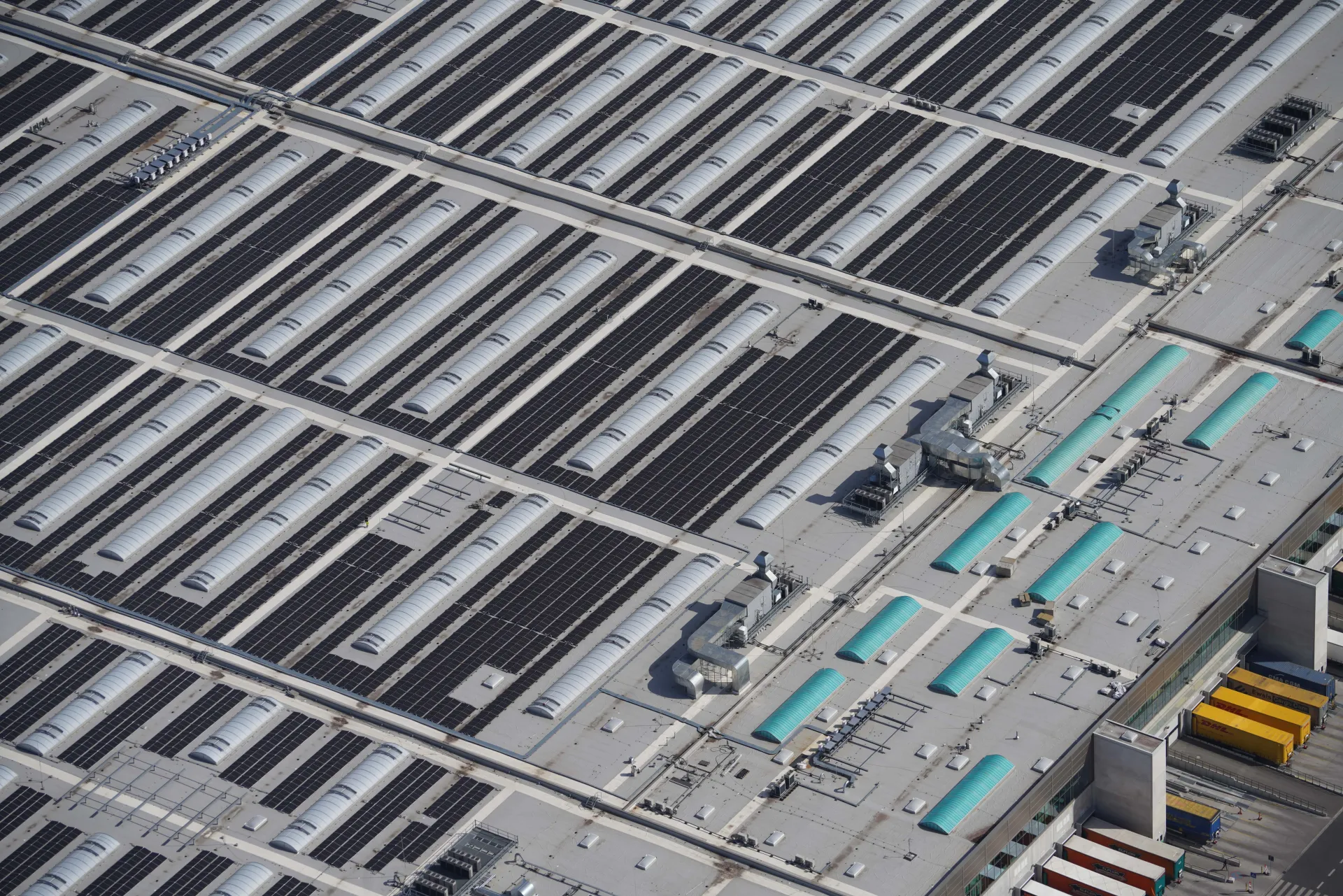
In 2011, when ETURN installed its first system, payback periods for commercial PV sat at 12–15 years. Today, depending on site, orientation and local grid tariffs, most industrial rooftop systems pay back in 5–8 years — and then generate essentially free electricity for the following two decades.
The driver is not subsidies. It is the convergence of lower panel costs, higher grid electricity prices, and the maturation of installation practices. A system installed today uses monocrystalline panels with degradation rates below 0.4% per year — meaning 90% of original output is still available at year 25.
What separates a robust investment from a speculative one is certainty. At ETURN, every project begins with independent energy modelling and site analysis. The outcome is a contractual production guarantee — a minimum kilowatt-hour yield that we stand behind. If the system underperforms, we remediate.
This is only possible because our design, procurement, installation and monitoring capabilities are all held in-house. We have no incentive to overstate yield projections, because we are the ones responsible for delivering them.
Solar PV is not a technology bet. It is an infrastructure decision — comparable to insulating a building or replacing inefficient HVAC. The risk is not whether it works; the risk is whether it is engineered and installed well enough to deliver its guaranteed performance across its full lifetime. Choose your EPC contractor accordingly.