 Energy Strategy
12 May 20255 min read
Every site is different. The right solar format depends on what land or roof space you have, what planning rules apply, what structural loads are permissible, and what secondary benefits (shading, shelter, biodiversity) you want to capture. This guide covers the four main formats ETURN installs and the key decision criteria for each.
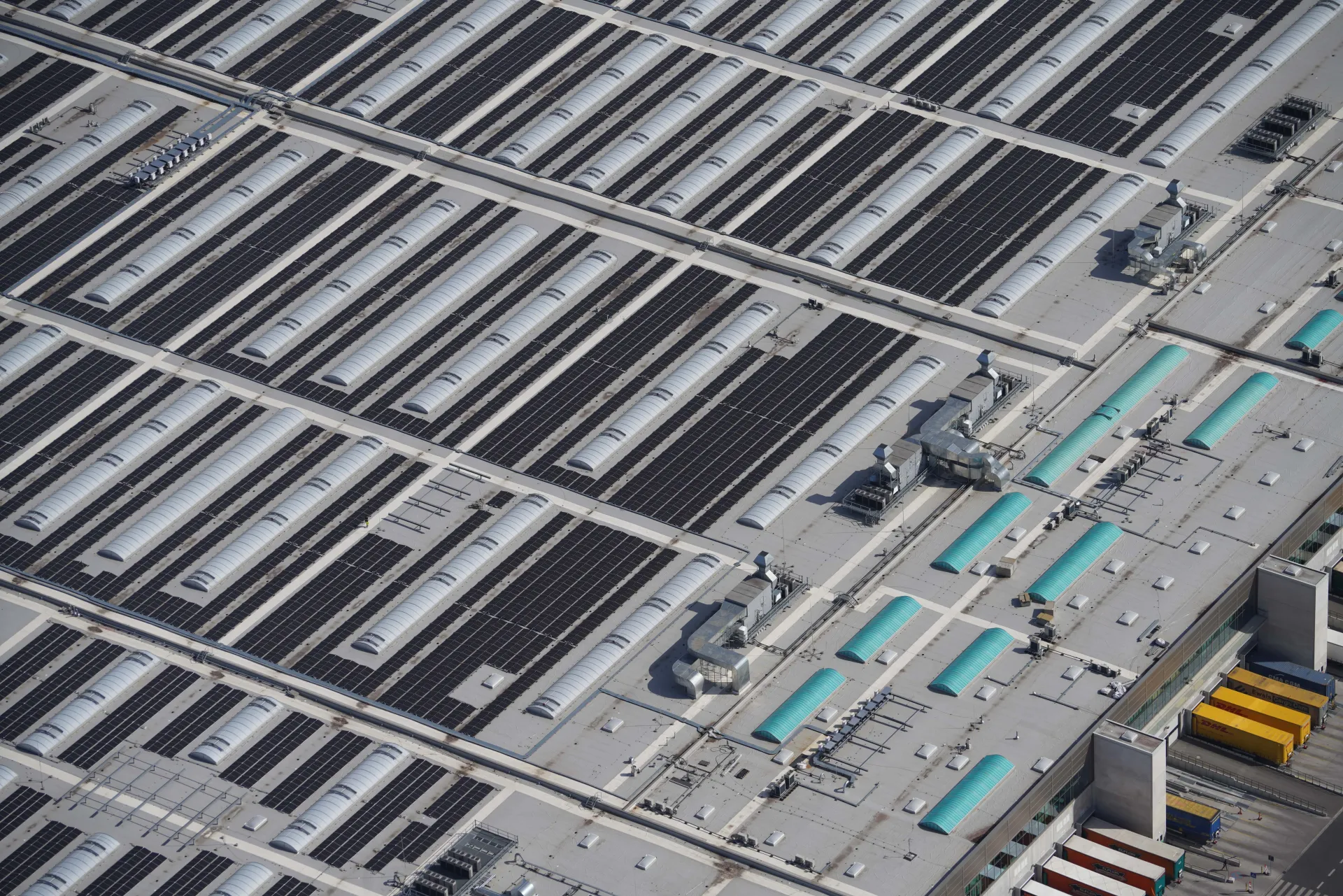
Rooftop is the default starting point for most commercial and industrial operators — for good reason. The roof is already paid for, structural surveys are well-understood, and permitting is generally straightforward for systems under certain capacity thresholds. The practical limits are roof age and condition, load-bearing capacity, and orientation.
A south-facing roof pitched between 15° and 35° in the Netherlands will produce approximately 900–950 kWh per kWp per year. Flat roofs with ballasted racking at 10–15° typically achieve 850–900 kWh/kWp, with the advantage of east-west orientation being possible to smooth the daily generation curve.
Ground-mounted systems are unconstrained by structural loads and can be optimised for any orientation. They are also more accessible for maintenance and cleaning. The challenge is land — both in terms of cost and planning permission. In the Netherlands, field solar outside designated zones requires a robust environmental impact assessment and community consultation process.
For agricultural land, agri-PV — where solar panels are elevated to allow crops or grazing underneath — is increasingly accepted by planning authorities and offers a dual land-use argument that strengthens applications.
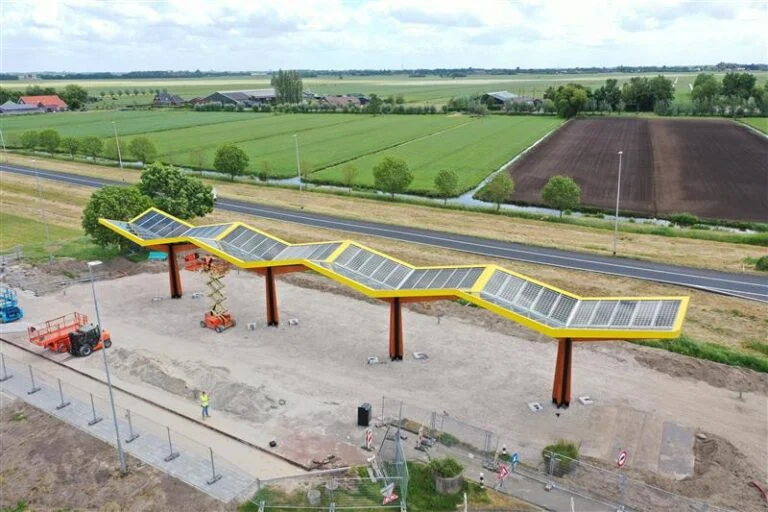
A solar carport converts existing car park infrastructure into a generating asset while simultaneously providing weather protection for vehicles. For logistics sites, retail parks and office campuses with large surface parking, it is one of the highest-value solar formats available — adding EV charging infrastructure as a natural extension.
The structural requirements are higher than rooftop (the canopy must carry both wind and snow loads) and civil works are more extensive. But the dual-purpose value — energy generation plus covered parking — often makes the business case compelling even at higher capital costs.
Semi-transparent solar glass or panels integrated into greenhouse structures allow simultaneous light transmission for crop production and electricity generation. This is a specialist application with a smaller addressable market, but for horticulture operators, it offers a path to near-zero energy costs in controlled growing environments.
"The format decision should come after the site survey, not before. We have seen projects where the obvious choice — rooftop — was the wrong one because a carport format delivered 40% more capacity on the same footprint."